 Changelly exchange
Changelly exchange is a Swap Router for Cross-Asset Conversion
Changelly exchange is a swap router - a service that compares conversion quotes - and non-custodial, meaning it doesn't maintain a user deposit balance. You choose two assets, provide a receiving wallet, send funds to a one-time address and receive the converted asset after blockchain confirmation and venue execution.
In this guide
The Network Mismatch Behind Preventable Errors
The most common preventable mistake is sending the right ticker over the wrong blockchain, so network matching comes before rate comparison.
USDT illustrates the constraint. Tether issues the token on Ethereum under ERC-20, on Tron under TRC-20 and on BNB Smart Chain under BEP-20. Ethereum mainnet uses chain ID 1, while BNB Smart Chain uses chain ID 56. Both expose 20-byte account addresses rendered as 40 hexadecimal characters after the 0x prefix, producing a 42-character string. Matching address shapes therefore prove very little; the sending network, deposit route and recipient support must all describe the same rail. That's the decision-critical distinction.
Read the asset name and network label together before creating the quote. Native BTC, Solana SPL tokens and Ethereum ERC-20 tokens use different settlement systems. When the origin wallet lacks the exact withdrawal network, choose another quoted pair or an exchange supporting that rail.
KYC Holds Change the Custody Assumption
An Anti-Money Laundering and Know Your Customer hold is Changelly's main constraint because it pauses payout after the deposit has moved.
The Hold Trigger
Changelly's risk scoring reviews the transaction and its address history before completing the conversion. Its policy identifies multiple accounts, certain transaction patterns, higher-risk jurisdictions and enhanced due diligence categories. It doesn't publish a universal size trigger. Treat verification as possible on every crypto-to-crypto transfer, including swaps opened inside Ledger or Exodus. A Hold status means the service has stopped execution until its compliance process resolves.
The Information Request
The Customer Identification Program asks an individual for four identity categories: full name, date of birth, physical address and government-issued photo identification. Enhanced review also requests source-of-funds material such as exchange history, purchase receipts or mining records. The policy retains identification records for 5 years after account closure and verification records for 5 years after each record's creation. That retention period deserves consideration before sending, since a hold begins after funds reach the generated address.
The Embedded-Wallet Handoff
A wallet integration doesn't keep case ownership with the wallet maker. Ledger or Exodus supplies the interface, while Changelly processes the route and compliance review. Save the wallet's Swap ID, the Changelly transaction ID and the blockchain hash before closing the screen. If predictable account-level verification matters, a venue where identity review finishes before deposit provides a clearer alternative. The matching explanation appears in Using Changelly exchange.
Fixed and Floating Quotes Make Different Promises
Fixed and floating quotes allocate price-movement risk differently, so the useful choice turns on timing and output certainty.
The Floating Window
A floating quote estimates the payout, then recalculates against the executable rate after the incoming transfer confirms. Its generated address remains valid for 3 hours. Changelly accepts a changed pay-in amount when it still clears the pair minimum, although the output changes with it. Market movement, source-chain confirmation time and the trading venue's executable price all affect delivery. This mode suits a prompt transfer when some output variation is acceptable.
The Fixed Window
A fixed quote locks output for 15 minutes, or 20 minutes when the input is BTC, XMR, LTC, DCR, EOS, GAS, BNB or VET. Those eight inputs receive the longer window. Changelly must receive the exact amount shown, after the sending wallet deducts its own fee. A late payment, a short payment or reuse of the address moves the transaction outside normal automation. Fixed pricing embeds a buffer for volatility, so compare the final payout with the floating alternative.
Where the Quoted Cost Comes From
On a first pass, Changelly's crypto-to-crypto quote combines two cost layers: an exchange fee and the destination network fee reflected in the displayed output.
For floating-rate transactions on Changelly's direct interface, the service deducts a 0.25% exchange fee from the output amount; API-partner pricing can differ. The second layer covers the withdrawal from the executing venue to the recipient wallet. Its value follows the destination asset, its blockchain and the venue's current withdrawal setting. A BTC payout, an ERC-20 payout on Ethereum and a TRC-20 payout on Tron therefore carry different cost bases.
Compare final output for the same pair, amount and destination network at the same moment. The fixed-rate service cost sits inside the offered rate. A route looking efficient for a larger transfer may remain uneconomic for a small one because the payout fee consumes a larger share.
Is Changelly Non-Custodial During a Swap?
Where that applies, Changelly is non-custodial at the account level, yet it controls the one-time deposit address while executing each individual conversion.
The service doesn't maintain a standing balance where users place orders over time. Instead, each transaction generates an address tied to one pair, one payout address and one conversion. Changelly waits for confirmations, moves the pay-in through an external trading venue and initiates the recipient payout. During that interval, the sender can't sign from the generated address. A compliance hold or manual review extends this service-controlled stage.
The label describes the absence of ongoing account custody, not uninterrupted key control throughout execution. An on-chain decentralized exchange retains a wallet-signed smart-contract flow, while Changelly trades that transparency for managed cross-asset routing.
Wallet Inputs and One-Time Deposit Addresses
Recipient, refund and routing fields determine whether Changelly can attribute the deposit and deliver the payout automatically.
A fixed-rate flow asks for two wallet addresses: one recipient and one refund address. Changelly then creates a deposit address active for exactly one transaction; reuse falls outside its normal processing path. Some assets also need an extra identifier. An XRP destination tag is a 32-bit unsigned integer, while a Stellar MEMO_ID is a 64-bit unsigned integer. Copy the supplied value exactly rather than retyping it or converting its format.
Keep the destination wallet open on the selected network before creating the transaction. MetaMask can display the same 0x account across several EVM networks, so its address alone doesn't confirm token support. A centralized exchange deposit address adds its own memo policy, making a self-custody wallet the cleaner destination when available.
Cross-Asset Conversion Without an Order-Book Account
For a first attempt, Changelly serves immediate cross-asset conversions when the user already holds one coin and wants another in a separate wallet.
Common uses include moving native BTC into ETH, converting LTC into a supported USDC route and leaving an asset without opening a persistent trading balance. The flow replaces account funding, order entry and withdrawal with one quoted transaction. Source-wallet costs, pair minimums and payout-network availability remain part of the decision. Because the service executes immediately, it offers no resting limit order for a future target price.
Repeated trading, staged entries and limit prices point toward Coinbase Advanced or Kraken Pro. Same-chain token swaps point toward Uniswap. Native cross-chain liquidity points toward THORChain. The Changelly exchange model occupies the middle: a managed route from one wallet-held asset to another.
Quote Routing Under the Hood
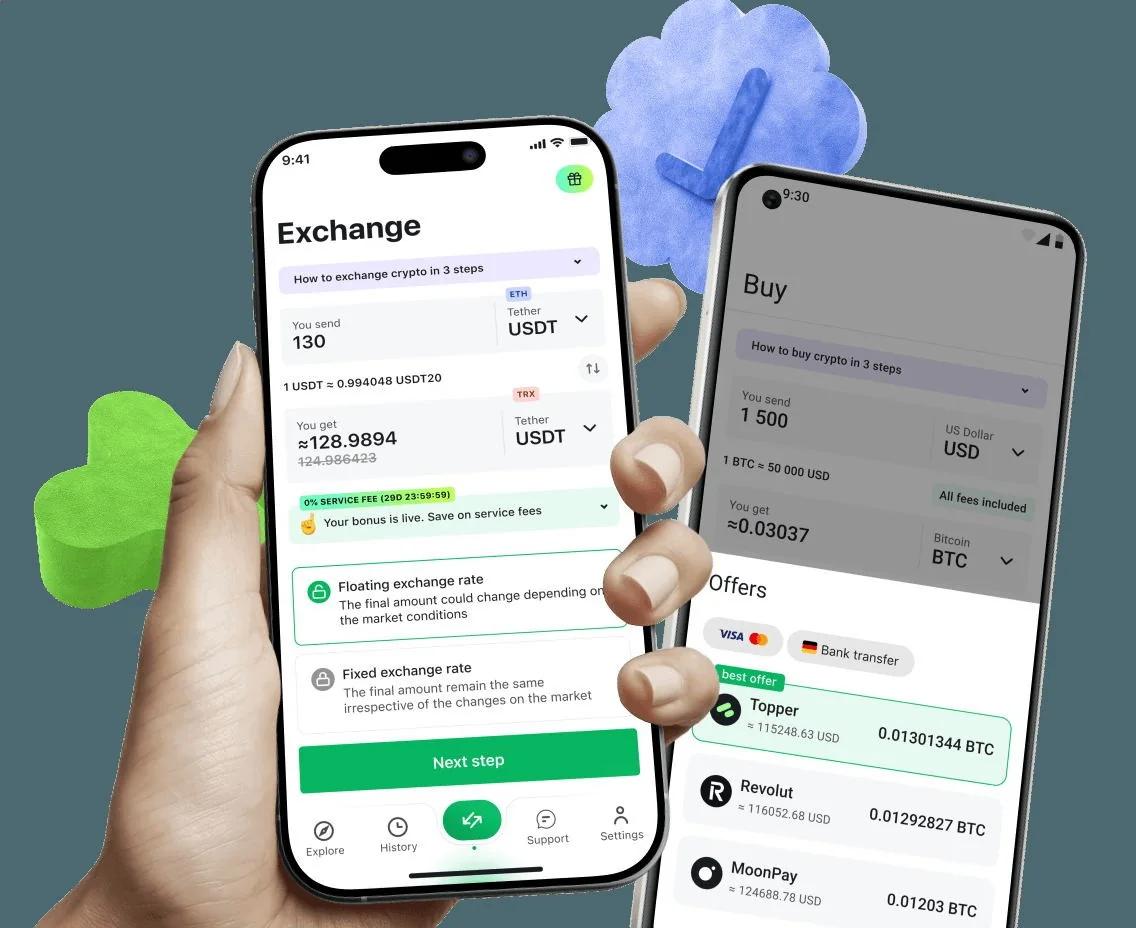
Said differently, Changelly's routing engine turns a pair, amount and payout address into a venue-backed conversion rather than a peer-to-peer order.
Pair and Amount Validation
The interface first normalizes the input asset, output asset, network and pay-in amount. The Changelly exchange API uses JSON-RPC 2.0 requests and RSA-SHA256 signatures. Quote methods reject unsupported tickers and amounts outside the pair's live limits. A network-specific code matters because an ERC-20 route and a TRC-20 route create different deposit and payout instructions.
Venue Execution
After the pay-in reaches its required confirmations, Changelly sends the funds through an external trading platform selected by its routing system. The venue supplies executable liquidity, and Changelly then requests the output withdrawal. That sequence explains why a floating estimate moves between quote and execution. It also separates the standard exchange from an atomic on-chain swap, where smart contracts settle the route without a service-managed trading step. Execution also inherits the venue's withdrawal state, so unavailable deposits or payouts remove an otherwise supported pair from routing.
Payout and Status
The Exchange API defines ten status labels: waiting, confirming, exchanging, sending, finished, failed, refunded, hold, overdue and expired. The customer interface presents related wording such as Created or Not paid. A finished conversion means Changelly has sent the output to the recipient address. The Changelly transaction ID tracks the service workflow, while the blockchain hash tracks the public transfer. Keep both identifiers because each answers a different operational question.
Mobile and Embedded Wallet Entry Points
Set against that, Changelly offers the fixed-or-floating exchange model through its web interface, iOS, Android and selected third-party wallet interfaces.
Ledger, Exodus, Trezor, Coinomi and MyEtherWallet have exposed Changelly-powered swap paths, although availability inside each product changes by asset and region. The wallet starts the request from a self-custody account; Changelly remains the conversion provider. Its mobile apps provide two quote modes and a QR scanner for addresses. Registration adds transaction history and account controls, while some exchange flows start without an account. Beginning on the direct interface makes the provider name, transaction ID and compliance channel easier to identify.
Coinbase, Kraken, Uniswap and THORChain as Alternatives
Coinbase, Kraken, Uniswap and THORChain provide four alternatives separated by custody, price control and the blockchains involved.
Coinbase Advanced and Kraken Pro maintain account balances and execute spot trades against order books. Their limit orders set a worst acceptable price, and their interfaces suit repeated conversions or staged execution. Both add account onboarding, asset deposits and a later withdrawal to self-custody. That structure gives more price control and a visible order history than an instant router, while the extra transfers add network steps.
The supporting detail is gathered in Exchange. Uniswap executes supported token swaps through automated market maker pools on its deployed chains; the user signs wallet approvals and pays gas in the network's native asset. THORChain routes native cross-chain swaps through RUNE-paired liquidity pools and threshold-controlled vaults. Both expose on-chain liquidity and price impact instead of a service quote. Choose Changelly for a managed one-ticket conversion, or choose these protocols when on-chain execution matters more.
A Decision Checklist Before Sending Funds
A five-point preflight check decides whether a Changelly route fits before an irreversible blockchain transfer leaves your wallet.
- Match the asset and network on both sides; Ethereum mainnet is chain ID 1 while BNB Smart Chain is chain ID 56.
- Confirm every recipient, refund, memo or destination-tag field in the receiving wallet.
- Choose the timing window: 3 hours for floating addresses, or 15 to 20 minutes for fixed quotes.
- Leave enough for the sender's fee so Changelly receives the displayed pay-in above the pair minimum.
- Accept the compliance path and keep origin records available if a KYC hold starts after deposit.
Run the check before opening a fixed quote because its timer starts immediately. If every condition fits, Changelly offers a compact cross-asset route without a persistent exchange balance. A mismatch on timing, network or compliance points toward an order-book venue, Uniswap or THORChain instead.
Questions worth asking
Can I use Changelly without creating an account?
Some Changelly crypto-to-crypto flows work without a registered account, although registration provides transaction history and account controls. The exchange still collects the destination address and may request Know Your Customer verification after risk scoring. Fiat purchases follow the selected payment provider's onboarding rules. An account therefore changes convenience and record access; it doesn't remove transaction-level compliance review.
Which transaction identifier should I save for Changelly support?
Save the Changelly transaction ID and the blockchain transaction hash because they identify different records. The Changelly ID tracks the conversion inside the service, while the hash records your on-chain payment. An embedded wallet may also show a Swap ID. Keeping all three values, the asset pair and the recipient address gives support enough context to locate the route more quickly and accurately without relying on a screenshot alone.
Why does a payment below Changelly's minimum fail?
Changelly validates a minimum for each asset pair before execution, and amounts below it don't cover the route's operational requirements. The minimum changes with the pair, so the quote screen alone decides. Account for the fee charged by the sending wallet; Changelly must receive at least the displayed pay-in amount, not the amount entered before withdrawal costs.
Can Changelly deliver crypto to a Ledger or Trezor address?
Changelly can deliver the output to an address controlled through Ledger or Trezor when the selected account supports the exact asset and network. Hardware custody doesn't change the payout rail. For ERC-20 tokens, select Ethereum; for BEP-20 tokens, select BNB Smart Chain. Add any memo or destination tag the receiving service supplies, then compare the full address and the exact payout amount on the hardware device screen before confirming.
Does a card purchase use Changelly's 0.25% exchange fee?
A card purchase uses Changelly's fiat marketplace, where the selected payment provider sets its own quote, fees, limits and verification steps. The 0.25% figure applies to floating-rate crypto-to-crypto exchanges on Changelly's direct interface; API-partner pricing differs. Compare the displayed final crypto amount and provider terms because a card route isn't the same product as a wallet-funded exchange.
How many blockchain confirmations does Changelly wait for?
Changelly waits for the confirmation count assigned to the incoming asset and transaction, and zero confirmations never advances the payment into exchange. The required number appears in the transaction interface when the asset needs extended confirmation time. Bitcoin, Ethereum and other networks produce blocks at different cadences, so a 30-minute service estimate begins after the incoming payment reaches the required confirmation threshold, not when your wallet finally broadcasts it.
Is 16 old enough to use Changelly?
Changelly's terms set 16 as the minimum age unless the user's jurisdiction requires a higher legal age. Eligibility also depends on local law, residency restrictions and the specific fiat provider or exchange feature involved. A younger user can't bypass the requirement through an embedded wallet because the same service terms and transaction-level screening follow the underlying Changelly route.