 Changelly exchange
Changelly exchange availability is determined by Asset and Network Eligibility
Changelly exchange availability is the asset-and-network eligibility for a swap, with native coins and tokens on different blockchains treated as separate routes. A listed symbol alone doesn't confirm a usable exchange. The selected network must match the sending wallet, the pay-in and payout directions must both work and Changelly must return the exact pair for the chosen rate mode. Because those operational flags change, the transaction screen or API response supplies the final answer.
Changelly and ChangeNOW Treat Network Variants as Separate Assets
Next to that, Changelly and ChangeNOW are instant-exchange services that represent one coin on several blockchains as separate selectable entries inside their swap interfaces and APIs during every quote request.
Changelly uses network-specific codes such as USDT20 for Tether on Ethereum and USDTRX for Tether on TRON. It also exposes distinct entries for Solana and other supported transports. ChangeNOW likewise binds a currency code to a network label. In both systems, selection commits the sender and receiver to one ledger rather than initiating a universal token transfer. A wallet balance displayed simply as USDT doesn't identify the route, token contract or fee-paying coin required for the next transfer before either platform creates a deposit address.
Across most deployments, Changelly exposes this distinction through JSON-RPC 2.0 records. Its detailed currency response separates overall status, pay-in status, payout status and fixed-rate status. ChangeNOW publishes per-network currency status through its own availability tools. Neither catalogue acts as a permanent compatibility list because an enabled entry still needs an enabled pair.
Availability Passes Through Four Separate Gates
Alongside that, Changelly route eligibility is a four-gate status model covering the listed currency entry, the selected direction, the exact pair and the chosen rate mode at quote time.
- The currency record must show the network-specific entry as enabled.
- The entry must accept deposits in the pay-in direction.
- The destination entry must support payouts and pair with the deposit code.
- The service must return a quote for the amount and floating or fixed mode.
Two direction flags create four logical states: both directions open, pay-in only, payout only or neither direction. Two rate modes add another filter because floating availability doesn't prove fixed-rate availability. Minimum and maximum amounts move with the asset, network fee and route liquidity, so Changelly calculates them at quote time. A visible coin remains ineligible when any one gate fails.
A Network Mismatch Overrides Ticker Familiarity
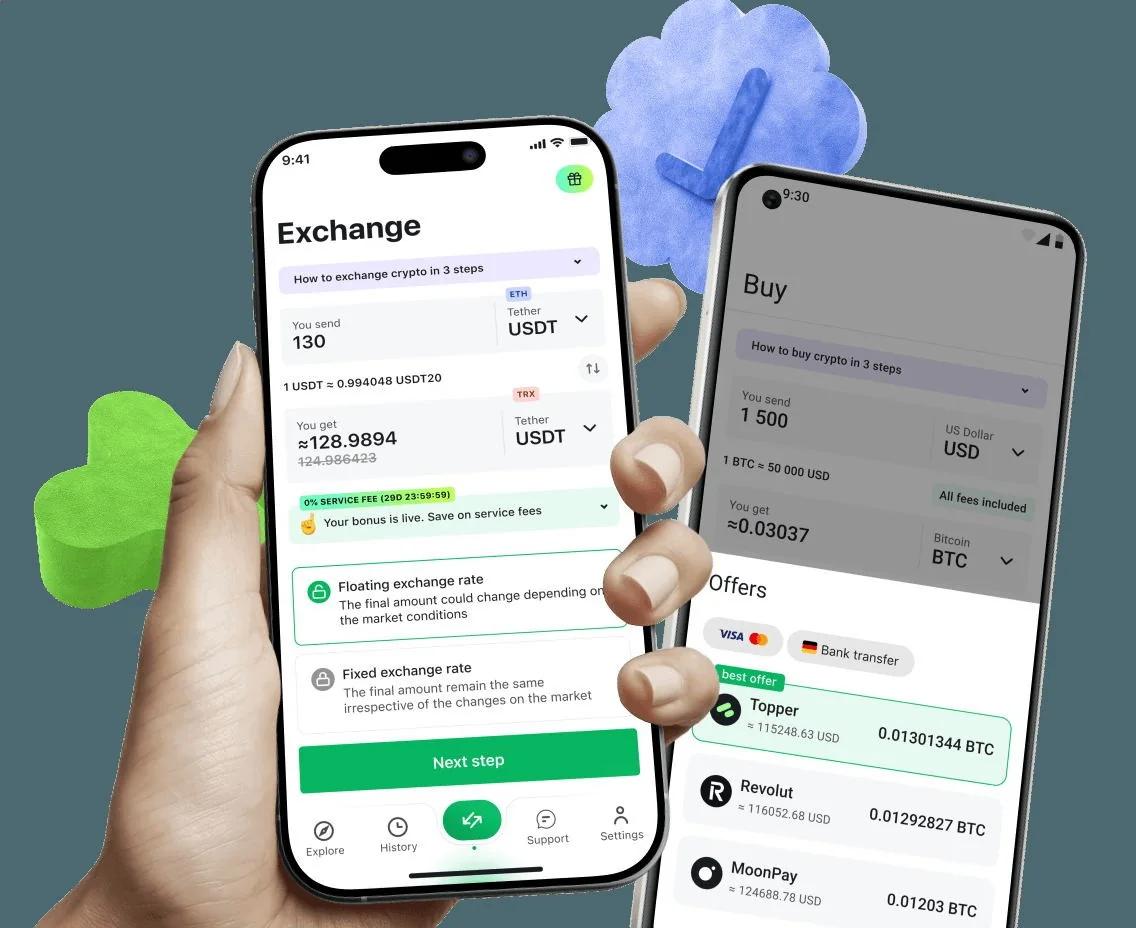
A network mismatch is a routing incompatibility where the wallet sends the right coin symbol through a blockchain Changelly didn't assign to that specific transaction's deposit route.
Ethereum mainnet uses chain ID 1 and BNB Smart Chain uses chain ID 56, while both present 20-byte EVM addresses with a 0x prefix. MetaMask can show the same hexadecimal account on both networks, but its active chain decides where the balance settles. TRON encodes a 21-byte payload as a 34-character Base58Check address beginning with T. Solana identifies accounts with 32-byte public keys. These fixed formats identify a network family; the selected Changelly code still names the precise deposit ledger and its expected token contract.
Tether makes the distinction concrete. USDT20, USDTRX and USDTSOL refer to Tether transported on Ethereum, TRON and Solana respectively. The Ethereum and TRON token contracts each use 6 decimal places, yet they settle on different ledgers. Match the route label before creating a deposit address.
Directional Flags Control Entry and Exit
Directional availability is a pair of independent service flags specifying whether Changelly accepts an asset as pay-in and whether it can deliver it as payout.
Directional States
Two boolean fields produce four combinations, so a token can remain useful on only one side of an exchange.
Pay-In Enabled
The enabledFrom field permits Changelly to receive the selected currency entry. It says nothing about delivering that same entry to another wallet.
Payout Enabled
The enabledTo field permits delivery to a recipient address. A payout-only entry can receive converted value even when Changelly won't accept it as the deposit asset.
Rate Mode Independence
The fixRateEnabled field adds a separate fixed-rate decision. The pair endpoint also distinguishes float from fixed transactions, so direction, pairing and rate mode form three independent checks. Changelly exchange availability therefore has more states than a single enabled badge suggests.
Wallet Address Families Narrow the Eligible Route
Wallet compatibility is the address-and-key layer that determines whether a receiving account belongs to the exact network variant Changelly selected before it accepts the route.
MetaMask uses the same 20-byte account across Ethereum and BNB Smart Chain, but the active chain still decides where a token appears. Phantom derives Solana accounts from a different path and Ledger can expose several account families from one recovery phrase. Exodus then presents those accounts through an asset-focused interface. Recovery data restores keys; it doesn't convert an Ethereum token balance into a TRON or Solana balance, as recorded in Exchange.
| Network Family | Fixed Network Parameter | Backup or Recovery Standard |
|---|---|---|
| Bitcoin | 8 decimal places; BIP-44 coin type 0 | BIP-39 mnemonic plus script type or descriptor |
| Ethereum | Chain ID 1; 20-byte EVM address | BIP-39 mnemonic plus the wallet derivation path |
| BNB Smart Chain | Chain ID 56; 20-byte EVM address | BIP-39 mnemonic plus the EVM derivation path |
| Solana | 32-byte account address | BIP-39 mnemonic plus the wallet derivation path |
| Selection Rule | Match the asset entry and network together | Preserve the seed, wallet family and derivation data |
BIP-39 defines five standard mnemonic lengths: 12, 15, 18, 21 and 24 words. BIP-44 then organizes recovery through five path levels. Wallet software still needs the original derivation and address type, especially for Bitcoin accounts. Changelly validates the payout address against the selected currency code, yet address validation only covers the route submitted.
Memos and Destination Tags Add a Second Routing Key
Memo-based availability is a two-part routing scheme in which Changelly needs both a shared blockchain address and the account-specific extra identifier shown for the route.
In the usual case, Changelly's address validator accepts an optional extraId for six codes: EOS, IOST, STEEM, STX, XLM and XRP. An exchange deposit for one of these assets can use a shared address, while the memo or tag assigns the transfer internally. The transaction-specific instructions decide whether that second value belongs on pay-in, payout or both.
XRP Ledger Destination Tags
An XRP Ledger destination tag is a 32-bit unsigned integer, giving 4 294 967 296 possible values. The tag doesn't change the XRP Ledger account. It tells the receiving system which internal balance should receive credit.
Stellar Memo Formats
Stellar supports a text memo up to 28 bytes, a 64-bit Memo ID and 32-byte hash or return-hash memos. Changelly displays the required extra field for the selected XLM route. Copy its type and value together with the address.
Token Contracts Separate Identical Symbols on One Chain
Token-contract eligibility is an identity check linking a network-specific currency entry to one deployed contract or mint, not merely to the symbol printed by a wallet.
Contract Identity on EVM Networks
ERC-20 standardizes token functions, but each asset instance lives at a 20-byte contract address. EIP-55 renders that address as 40 hexadecimal characters after the 0x prefix and adds about 15 checksum bits through letter casing. Tether's Ethereum USDT contract uses 6 decimals. Another ERC-20 contract can reuse the USDT symbol without becoming the same asset entry.
Mint Identity on Solana
The SPL Token Program identifies a token through its 32-byte mint address, while each holder uses a separate token account for that mint. Changelly's detailed currency record can include a contract address for token entries. Contract or mint identity settles symbol ambiguity within a network; the network field still separates ledgers.
Advanced Eligibility Checks Belong Before Deposit Creation
Pre-deposit eligibility is an API validation sequence that refreshes the currency record, confirms the pair, checks the receiving address and obtains a quote before funds move.
An integration first reads getCurrenciesFull, then calls getPairs with the exact pay-in and payout codes. It validates the recipient through validateAddress and requests the intended floating or fixed quote. Only after those checks should it create the transaction and display the deposit address, network label and extra ID. This order keeps a stale catalogue entry from becoming a deposit instruction.
In the same way, Changelly signs authenticated API requests with HMAC-SHA512 and documents a default ceiling of 10 requests per second. Availability responses deserve short-lived caching, while deposit creation needs a fresh check. For a person using the exchange screen, the equivalent rule is direct: keep the displayed currency code, blockchain label, recipient format and memo together until the transfer completes.
Key questions about Changelly exchange availability
Can Ledger or Exodus show fewer Changelly network variants than the main exchange interface?
Yes, a wallet integration can expose a narrower Changelly catalogue than the main interface. Ledger or Exodus controls its interface and enabled partner routes, while Changelly controls underlying currency and pair states. A variant can stay hidden until the wallet supports its code, address fields and memo handling. Use the network label inside the transaction you're actually creating, not a remembered asset list.
How long does a temporarily disabled Changelly network stay unavailable?
A disabled network has no fixed restoration window on Changelly. Maintenance, wallet node health, exchange-partner status and blockchain conditions determine when the asset or pair returns. The detailed currency response changes as soon as Changelly enables the relevant direction again. An existing transaction keeps its own status and identifiers, so renewed catalogue availability doesn't automatically settle a deposit created during the interruption. Treat the live route response as the only usable timing signal before making any new transfer.
Does Changelly accept testnet coins for a listed mainnet asset?
No, a listed production asset doesn't make its testnet version eligible. Testnet BTC, Sepolia ETH and BNB Smart Chain testnet tBNB follow different networks from Bitcoin mainnet, Ethereum mainnet and BNB Smart Chain mainnet. Their units don't satisfy the route Changelly created, even when wallet software displays the same base ticker. The deposit screen identifies the production network, so a syntactically familiar testnet address or transaction remains outside that transaction's asset eligibility and can't fulfill its deposit instruction.
Which records help after a listed token changes contracts?
Keep the Changelly transaction ID, exact currency code, blockchain name, token contract or mint, deposit hash and payout hash. A migration introduces a new contract while old balances can remain on the legacy contract. Those records show which version and ledger the exchange processed. A ticker screenshot doesn't preserve contract identity, while a recovery phrase restores keys without mapping the exchange record to a replacement contract.